HOW TO GET YOUR INSTRUMENT RATING IN LUBBOCK, TEXAS
Flying When the Horizon Disappears
At some point after earning your Private Pilot License, the excitement settles into something more familiar. You’re comfortable in the airplane. Checklists flow without thinking. You can handle yourself in the pattern, navigate cross-country, and make solid decisions.
But then you hit a limitation.
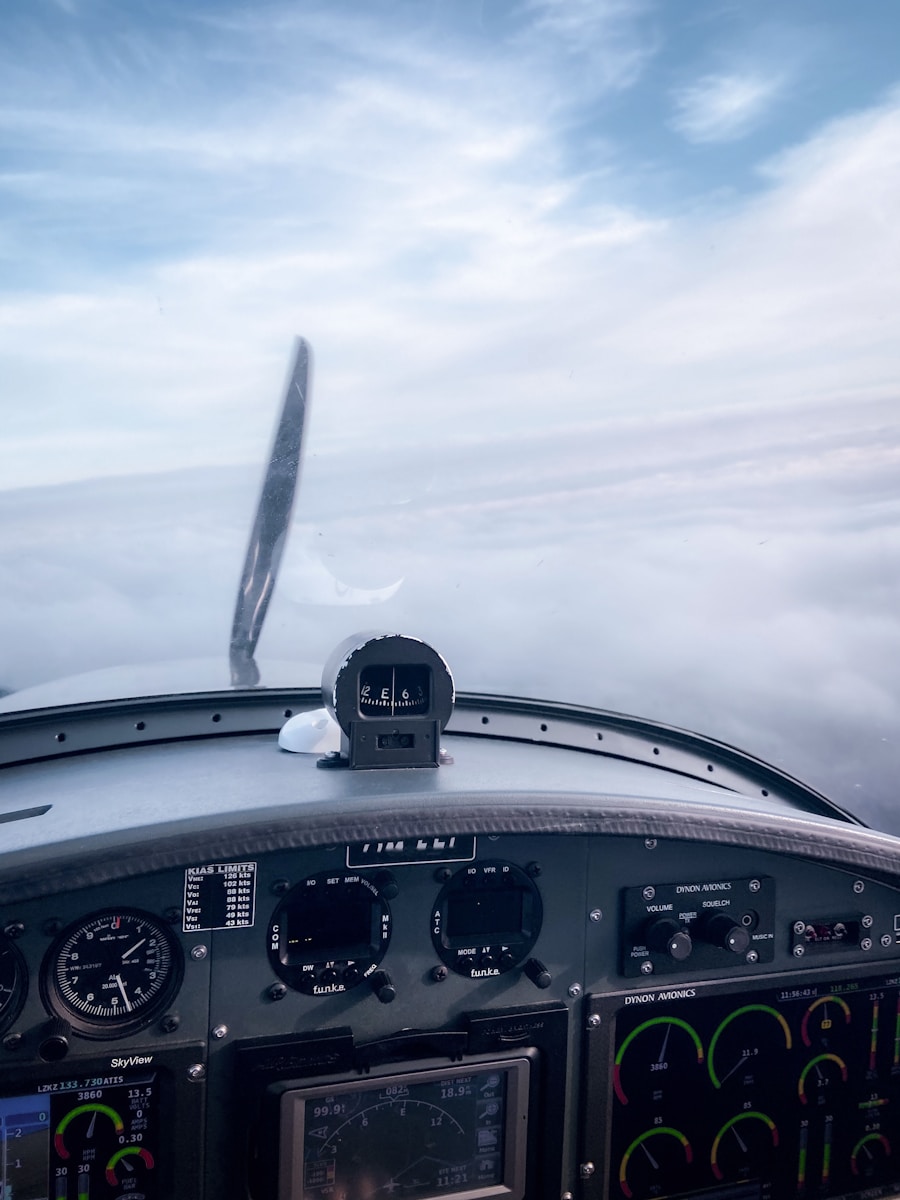
A layer rolls in. Visibility drops. The horizon fades into a dull gray blur—and suddenly, the freedom you just earned has boundaries again.
That’s where the Instrument Rating changes everything.
What an Instrument Rating Really Does
An Instrument Rating isn’t just another box to check—it fundamentally changes how you operate as a pilot.
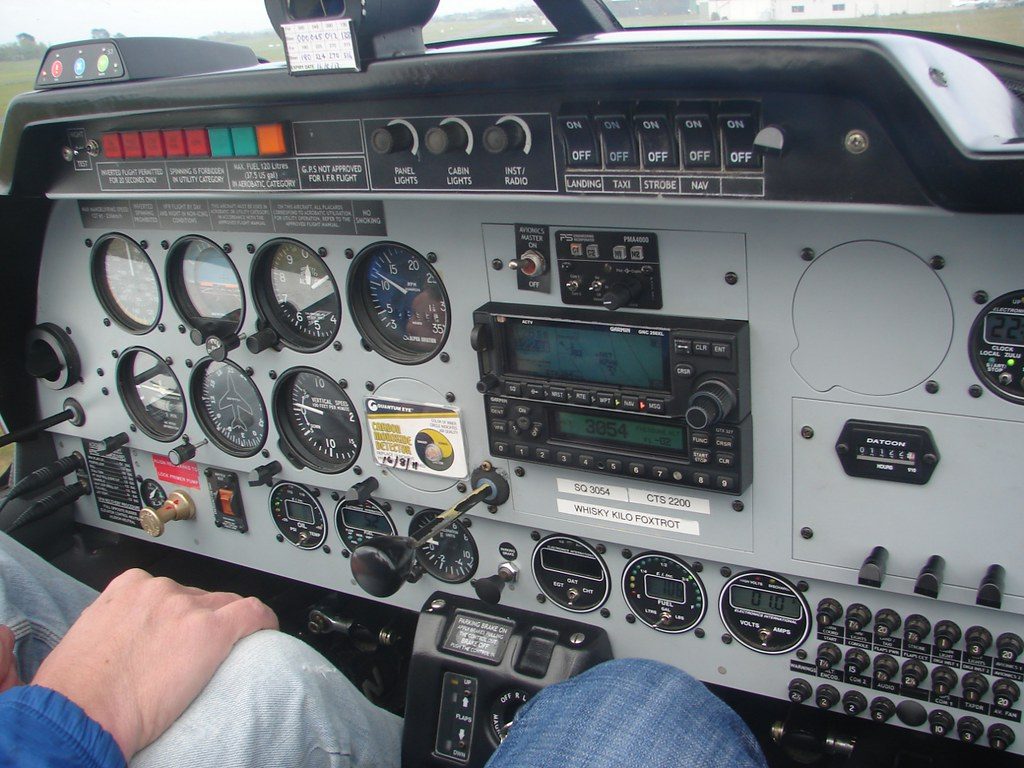
Instead of relying on outside visual references, you’re trained to fly the aircraft solely by reference to instruments. That means you can safely operate in clouds, reduced visibility, and more complex weather environments.
But more importantly, it’s not just about legality—it’s about confidence and capability.
You go from avoiding weather…to understanding it, planning around it, and flying through it when appropriate.
The Shift in Mindset
If Private Pilot training is about learning to fly the airplane, Instrument training is about learning to manage information.
You’re no longer just controlling pitch and power—you’re:
Interpreting multiple instruments at once – Staying ahead of the aircraft – Communicating clearly with ATC – Anticipating procedures before they happen
It’s a different kind of flying. More precise. More disciplined. And at times, more mentally demanding.
But for many pilots, it’s also where flying starts to feel truly professional.
FAA Requirements (And What They Mean in Practice)
To begin Instrument Rating training, you’ll need to already hold a Private Pilot License and be ready to build on that foundation.
The FAA requires 50 hours of cross-country Pilot-in-Command time, along with 40 hours of actual or simulated instrument time. Within that, you’ll complete structured training that includes instrument approaches, holding procedures, and en route navigation under IFR.
On paper, those are just numbers. In reality, it’s about building a level of precision where altitude, heading, and timing aren’t suggestions—they’re exact.
What Training Looks Like
Instrument training has a rhythm to it, and it usually starts with what feels like a step backward.
You’ll put on a view-limiting device—effectively removing your outside references—and suddenly, everything you relied on visually is gone. At first, it can feel disorienting. Your scan is slow. Small deviations creep in.
Then something clicks.
Your instrument scan tightens up. You start to anticipate instead of react. Corrections become smaller, smoother, and more intentional. Before long, you’re flying headings and altitudes with a level of precision that would’ve felt impossible early on.
From there, training expands into the real backbone of IFR flying: procedures.
You’ll learn how to fly instrument approaches into airports, descend through layers, break out of the clouds, and transition to a landing. You’ll practice holding patterns, which feel like organized chaos at first but eventually become second nature. You’ll file IFR flight plans, work closely with air traffic control, and operate within a system that’s far more structured than VFR flying.
And yes—at some point, you’ll fly in actual clouds. That first time is a moment every instrument pilot remembers. The world disappears, and it’s just you, your instruments, and your ability to trust your training.
The Knowledge Side: Where Things Get Deeper
Ground knowledge at the instrument level takes a noticeable step up.
Weather becomes more than just “can I go or not?”—you’ll start analyzing systems, fronts, icing potential, and forecasts in a way that directly impacts your decision-making. Regulations become more nuanced. Approach plates, en route charts, and IFR procedures become part of your everyday toolkit.
This is also where many pilots begin to appreciate how much they didn’t know as private pilots—and that’s a good thing.
You’re building a deeper understanding of aviation as a system, not just as an activity.
Cost of an Instrument Rating in Texas
Instrument training is typically more efficient than private training in some ways, but it still represents a meaningful investment.
In the Lubbock area, most pilots can expect to spend somewhere in the range of $8,000 to $12,000 to complete their Instrument Rating.
The bulk of that comes from aircraft and instructor time, just like your private training, though some of the hours may be completed in a simulator, which can help reduce overall cost. You’ll also have the FAA written exam fee, additional study materials, and the final checkride to factor in.
Because you’re already a pilot, many of the startup costs—headsets, supplies, and general familiarity—are behind you. What you’re really investing in here is refinement and capability.
How Long It Takes
The timeline for an Instrument Rating tends to be a bit more predictable than private training, largely because you’re starting from a solid foundation.
With consistent flying—two to three times per week—many pilots complete their training in two to four months. Stretch that schedule out, and it can easily extend to six months or more.
Just like before, consistency is everything. Instrument skills are perishable, and staying sharp between lessons makes a noticeable difference in both progress and cost.
Why Training in Lubbock Gives You an Edge
Lubbock offers a unique advantage for instrument training that often goes overlooked.
You get access to real-world IFR conditions without the constant congestion of larger airspace. That means more time flying approaches, less time waiting for sequencing, and more opportunities to build meaningful experience. When weather moves through West Texas, it creates excellent training scenarios without overwhelming complexity.
It’s a balance that’s hard to find in busier environments.
Why the Instrument Rating Matters
Ask almost any pilot who has earned their Instrument Rating, and you’ll hear a similar answer:
It changes everything.
Not just in terms of what you’re allowed to do, but in how you think, how you plan, and how you fly. Your situational awareness sharpens. Your decision-making improves. Your confidence grows—not from guessing, but from understanding.
It’s the rating that takes you from being a recreational pilot to a truly capable one.
Why Train with AlphaZet Aviation
Instrument training is where instruction quality really starts to matter.
At AlphaZet Aviation, the focus is on building not just proficiency, but clarity. It’s one thing to fly an approach—it’s another to understand exactly what’s happening, why it’s happening, and how to stay ahead of it.
Training is structured around real-world application, not just passing a checkride. You’ll work in an environment that emphasizes precision without pressure, where mistakes are used as teaching moments and progress is tailored to your pace and goals.
Whether you’re continuing toward a commercial career or simply want to become a safer, more capable pilot, the goal is the same: to make you confident in the system, not just compliant with it.
Take the next step!
If you’ve already experienced the limits of VFR flying, you know what’s on the other side of this rating.
More capability. More flexibility. More confidence.
The next step is simple—get back in the airplane, start working under the hood, and begin building the skills that open up an entirely new side of aviation.
Take your flying to the level with an Instrument Rating in Lubbock with AlphaZet Aviation, where the horizon is no longer a limitation—it’s just a reference.